


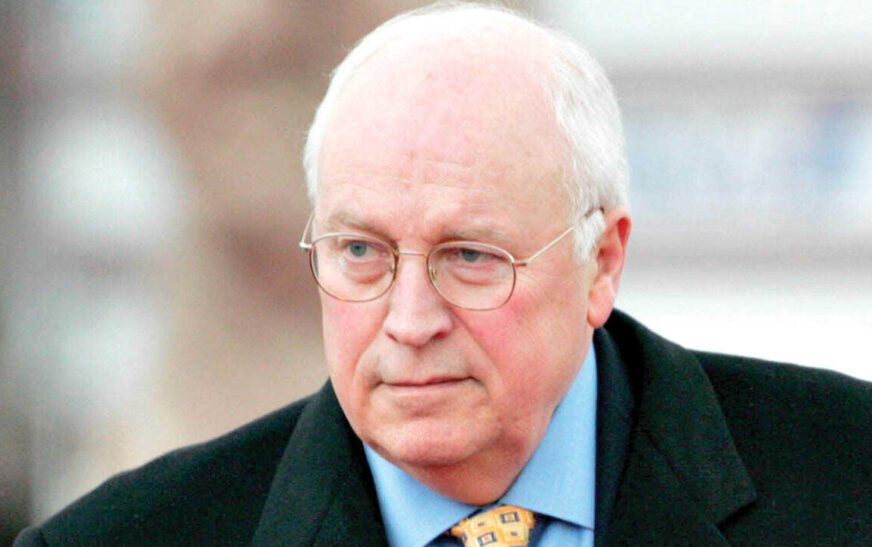
A towering figure in American politics and a key architect of the nation’s post-9/11 foreign policy, Dick Cheney, has passed away at the age of 84. His family indicated that his passing occurred on Monday night, attributing it to complications arising from pneumonia and a pre-existing cardiovascular condition.
His career trajectory was marked by a rapid ascent and sustained influence across several presidential administrations. He first rose to prominence in the 1970s, serving as Chief of Staff to President Gerald Ford at the remarkably young age of 34. Later, his tenure as Vice President under George W. Bush, from 2001 to 2009, solidified his reputation as one of the most impactful figures in the history of the office. During this period, he played a central role in shaping the nation’s response to global terrorism, notably advocating for the 2003 intervention in Iraq.
Prior to his vice presidency, he spent a decade representing Wyoming in the House of Representatives and served as Secretary of Defense under President George H.W. Bush, leading the Pentagon during the 1990-91 Gulf War. In his later years, however, Cheney became a vocal critic of the Republican Party’s direction under Donald Trump, marking a notable divergence from his traditional party alignment.
Born in Lincoln, Nebraska, in 1941, Cheney’s educational path included a scholarship to the esteemed Yale University, though he did not complete his undergraduate degree there. He subsequently earned a master’s in political science from the University of Wyoming. His initial foray into Washington D.C. began in 1968, working for then-Congressman William Steiger of Wisconsin.
Those closest to him remembered his profound dedication to his nation and his family, emphasizing the values of courage, honor, kindness, and a shared passion for activities such as fishing that he imparted to his descendants